

The difference between a great deer hunt and a miserable one? It rarely comes down to luck. Most of the time, the outcome gets decided days — sometimes weeks — before you ever step into the woods. Experienced hunters know this already. In fact, they treat pre-hunt prep like a second job. They do not leave gear readiness to chance, and their gear preparation habits reflect years of hard lessons learned the expensive way. A frayed string. A fogged optic. Broadheads that flew perfectly in September but wobble in November. These small failures stack fast when you’re sitting in a stand at dawn, watching a buck you cannot shoot because something broke. Ultimately, here is what veterans actually do before every season — and why skipping any of it is a gamble you’ll lose eventually.
Inspect Every Piece of Equipment Before the Season Starts
Start early. Like, August early. The single worst thing you can do is pull your crossbow out of storage the night before opener and assume everything still works. It won’t. Temperature swings in a garage or closet warp limbs over time, and moisture does ugly things to strings that sat coiled for months. Consequently, you need to go through every component with your hands, not just your eyes. Feel the cables for fraying, check the rail for warping, and roll each bolt across a flat table to test straightness. Also, inspect the trigger mechanism — a sticky safety or sluggish release is a disaster waiting to happen.
Beyond the crossbow itself, every accessory deserves the same treatment. According to Redacted Arms LLC, pre-season inspection extends the functional life of firearms and accessories by years, and that principle carries across all hunting gear. Pull out your rangefinder. Check the battery. Test it against a known distance. Then dig out your harness and examine every stitch and buckle — because a treestand safety harness is not something you want to field-test with your body weight. Naturally, your boots need the same attention. Worn-out insoles and cracked waterproofing will punish you by mid-morning on day one. Consistent gear preparation habits always begin with a full equipment audit, weeks before you actually need anything.
Test-Fire and Re-Zero Your Crossbow
Here’s the thing about crossbows that have been sitting in a case since last November: they drift. Even without any visible damage, the zero you had dialed in last season is probably off. Maybe just a little. Maybe enough to wound an animal instead of making a clean kill. Neither option is acceptable, and pretending otherwise helps nobody. Still, a surprising number of hunters skip this.


So get to the range to practice crossbow hunting and learn all the regulations. Shoot at 20 yards first, then 30, then 40 — confirming point-of-impact at each distance before moving back. Furthermore, do not just use field points. Switch to the actual broadheads you plan to hunt with, because flight differences between field tips and broadheads are real and sometimes dramatic. A 100-grain Muzzy flies differently than a 100-grain field point, period. Next, write your settings down. Photograph your turret positions if you have to. Good gear preparation habits mean treating verification as a recurring task, not a box you checked once in September and forgot about. After any hard impact — dropping the bow, a rough truck ride on a logging road — re-zero again. No exceptions. Seriously, just do it.
Organize and Waterproof Your Pack System
You’ve probably seen someone dump their entire pack on the ground mid-hunt, searching for a grunt call buried under granola bars and hand warmers. Don’t be that person who ignores safety basics.
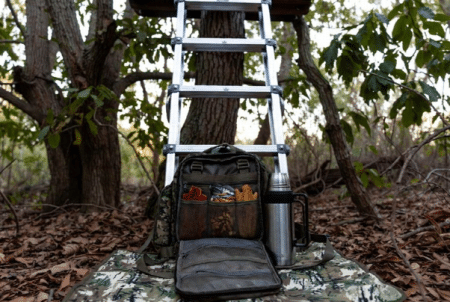
Veterans lay every single item on the floor before packing. All of it. They sort by priority and function — calls in one compartment, first aid in another, fire-starting redundancies in a sealed dry bag. Obviously, if you’re not waterproofing your critical gear inside your pack, you’re relying entirely on a rain cover that will fail the moment a branch snags it.
Sea to Summit and Outdoor Research both make compression dry sacks that weigh almost nothing. Toss your electronics, extra socks, and fire kit inside those. In addition, keep a small Ziploc with backup batteries and a spare lighter — redundancy is not paranoia when you are three miles from the truck. Meanwhile, audit for dead weight. That extra knife you never use? Leave it at home. The third flashlight? Probably unnecessary. Certainly, efficient pack organization is one of those gear preparation habits that saves minutes in the field — and minutes matter when a blood trail goes cold at dusk.
Sharpen, Replace, and Practice With Your Broadheads
Dull broadheads are an ethical problem. Full stop. If a blade cannot slice through paper cleanly with light pressure, it is not ready for an animal. Yet plenty of hunters skip this step because they assume factory-sharp means field-ready. Sometimes it does. Often it does not. Of course, this means you need to verify every single head yourself.

Pull your quality broadheads from your quiver and test each one individually. Replace any blade that shows nicks, rust, or bending — replacement blades from brands like Rage and Swhacker cost a few dollars each, so there’s no excuse. After sharpening or replacing, shoot them. Not just one. All of them. Broadhead-to-broadhead consistency matters because even small weight or alignment differences change where your bolt hits at 30 yards. Importantly, practice with the exact heads you will carry on the hunt. Likewise, shoot often enough that you trust their flight at every distance you might realistically take a shot from a stand or blind.
Final: Check Clothing Layers and Scent Control
What about your clothing system? Most hunters overthink camo patterns and underthink layering. A $300 Sitka jacket means nothing if your base layer holds sweat against your skin and you’re shivering by 9 AM. Indeed, check every layer. Zippers, seams, DWR coating — all of it. If the water is no longer beading on your outer shell, reapply a wash-in treatment like Nikwax TX directly before the season starts.
Scent control is the final checkpoint. Wash everything in scent-free detergent — Dead Down Wind or ScentAway, nothing from the regular laundry aisle. Store your layers in sealed bags with activated carbon or earth-scented wafers until the morning of the hunt. Similarly, your boots should get a wipe-down with scent-eliminating spray before you walk to the stand. These closing gear preparation habits are the ones that separate the hunter who sees deer from the one who just sees trees. Skip them at your own risk.