

DNT ZULUS HD V2 3-12X LRF Review
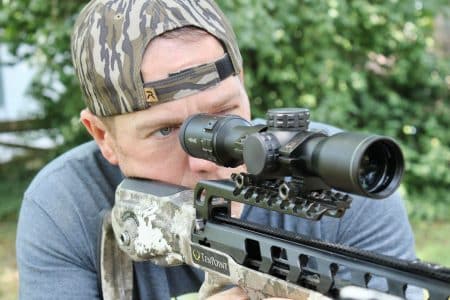
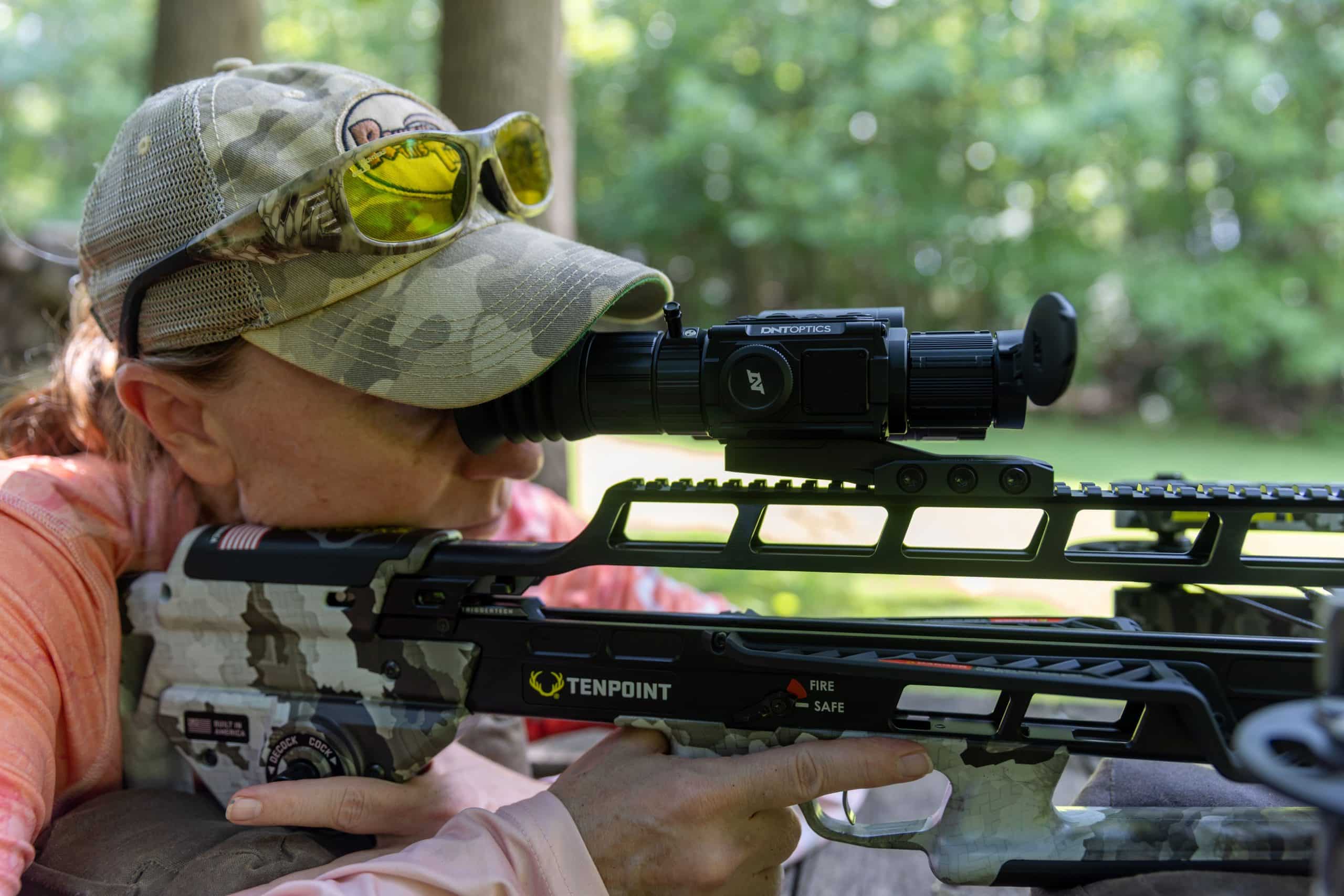
We mounted the DNT ZULUS HD V2 3-12X digital scope on a TenPoint TX Ultra 29.5 and tested its laser rangefinder, ballistic calculator, one-shot zero, image clarity, recording system, and downrange accuracy at 30, 50, and 100 yards.
Tech-focused crossbow hunters
TenPoint TX Ultra 29.5
30, 50 & 100 yards
3-12X digital
5-1,100 yards
18.4 oz.
The DNT ZULUS HD V2 3-12X LRF combines a crisp digital sight picture with rangefinding, ballistic compensation, onboard recording, and a simple one-shot zero system. The ballistic calculator required some tuning as we stretched the test farther, but once dialed in, the optic produced impressive 50- and 100-yard results. It is best suited to hunters who want an integrated digital aiming system and are willing to spend a little time setting it up correctly.
Why We Tested the DNT ZULUS HD V2 on a Crossbow
Crossbow technology has advanced significantly in recent years. Every January seems to bring new models that are smaller, faster, and more precise. TenPoint has been one of the companies pushing that development, and we recently put the TenPoint TX Ultra 29.5 through a thorough accuracy test.
The optics side of the equation is changing just as quickly. TenPoint now offers its Vision HD digital rangefinding scope on several crossbow packages. The Vision HD is closely related to DNT Optics’ ZULUS HD V2 platform, pairing an integrated laser rangefinder with ballistic compensation and recording capabilities.
That raises an obvious question: Do you really need a digital rangefinding scope on a crossbow?
We wondered the same thing. After testing the TX Ultra 29.5 with a conventional EVO-X Marksman Elite scope and establishing what the crossbow could do at distance, we swapped optics and repeated the process with the DNT ZULUS HD V2 3-12X LRF. We zeroed at 30 yards and then tested the system at 50 and 100 yards to see whether the rangefinder and ballistic calculator could deliver in real use.

DNT ZULUS HD V2 3-12X LRF: Product Description
The DNT ZULUS HD V2 is a compact digital day/night optic available in multiple configurations. For this review, we tested the 3-12X version with the integrated laser rangefinder and ballistic calculator. That distinction matters because DNT also sells a 3-12X model without the LRF.
The tested configuration uses a 1920×1080 sensor and Micro-OLED display, a 60 Hz refresh rate, 3-12X digital magnification, 32 GB of internal storage, Wi-Fi/app connectivity, and an integrated laser rangefinder. It is built around a 21700 battery system and mounts to a Picatinny rail.
On paper, that gives hunters a lot of technology in one compact package. The more important question is whether those features make shooting simpler or merely add more setup. That is what we wanted to find out.
Key Features and Benefits
These are the features that mattered most during setup and range testing.
Sony STARVIS 2 Sensor
The sensor is the foundation of the sight picture. In daylight testing, image quality was crisp and detailed, with good contrast across bright areas and darker backgrounds. The platform is also designed for low-light and infrared-assisted use where legal.
1920×1080 Micro-OLED Display
The 60 Hz display was one of the biggest pleasant surprises. Digital optics can look grainy or disconnected from real movement, but this scope produced a clear, responsive sight picture during our daylight range sessions.
3-12X Magnification
The throw lever makes changing magnification simple. During full-daylight testing, image quality remained usable at 12X without the exaggerated graininess we have seen from some digital zoom systems.
Integrated Laser Rangefinder
The built-in LRF removes a separate step from the shot process. Rather than ranging with a handheld unit, putting it away, and returning to the crossbow, the shooter can range through the optic while staying on target.
Ballistic Calculator
Once a ballistic profile is built and the scope is zeroed, the ZULUS uses the measured range to generate an adjusted aiming point. TenPoint’s Vision HD version includes pre-loaded TenPoint arrow profiles; DNT users can create a custom profile and sync it through the DNT app.
One-Shot Zero
After firing a confirming shot or group, the image can be frozen while the reticle is moved to the actual impact point. It is much faster than repeatedly chasing point of impact through conventional turret adjustments.
9 Reticles / 5 Colors
The optic offers nine reticle choices and multiple reticle colors. That flexibility helps keep the aiming point visible against changing backgrounds and allows the shooter to tailor the display to personal preference.
Picture-in-Picture
PIP allows the main view to remain wider while a magnified secondary window provides a closer look at the target. That can be useful when you want situational awareness without giving up precise aiming.
Onboard Recording + 32 GB Storage
The built-in recording system is more than a novelty. Reviewing footage after the shot can help a hunter evaluate impact location, and the integrated storage eliminates the problem of forgetting an SD card.
DNT App Connectivity
The app makes ballistic-profile setup and general settings easier to manage. A connected phone or tablet can also function as a secondary viewer, which is useful when another person is sitting beside the shooter.
Picatinny Mount
The included extended Picatinny mounting system helps position the optic properly for a comfortable cheek weld and works well with the scope’s 65 mm / 2.7-inch eye relief.
Digital Day/Night Capability
The ZULUS can also function as a digital night-vision optic with compatible IR illumination. That expands its usefulness for legal hog, coyote, and nuisance-animal hunting, although hunters need to verify regulations before using electronic or night-vision optics on game animals.
DNT ZULUS HD V2 3-12X LRF Specifications
1
Real-World Range Performance
Specifications tell you what a digital optic is designed to do. The range tells you whether it actually works.
30 Yards: Zeroing
We built the ballistic profile and zeroed the scope at 30 yards. The one-shot zero system was extremely easy to use. The only real opportunity for error comes when freezing the image: if the crossbow moves while the screen is being frozen, the reference point can shift. Having a second person make the adjustment through the DNT app can make the process even more precise.
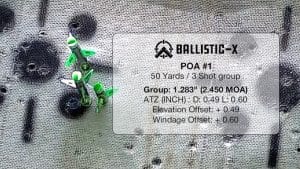
50 Yards: 1.283-Inch Three-Shot Group
At 50 yards, we needed to make a few adjustments to the ballistic coefficient so the calculated aiming point better matched the actual arrow drop. That sounds more complicated than it was. The change was made in the app, synced to the optic, and the system was ready for another string.
Once the BC was corrected, we ranged the target, used the scope’s adjusted aiming point, and landed the shots within roughly an inch of where the system indicated. Our three-shot group measured 1.283 inches at 50 yards.
50 yd.
1.283″
BC Fine-Tuning

100 Yards: Impressive Accuracy, but Calibration Matters
The 100-yard test was where things became more interesting. Our first long-range shot sailed over the target, a clear sign that the ballistic profile still needed additional adjustment as distance increased.
After correcting the setup, the next impact landed just over an inch from the calculated aiming point and another landed a couple of inches farther away. With our arrow supply getting thin, we retrieved and re-shot one of the remaining arrows to complete a three-shot string.
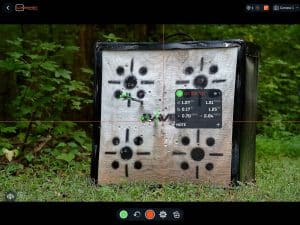

The resulting group measured an eye-opening 1.27 inches at 100 yards. That is a testament to the accuracy potential of the entire crossbow-and-optic system, but the earlier miss also reinforced the most important lesson from this test: do not assume a ballistic profile is perfect simply because it works at your zero distance. Confirm it at the distances you intend to shoot.
100 yd.
1.27″
Verify Ballistics at Distance
2
Image Quality, Recording and App Performance
Accuracy is the headline feature, but the viewing experience matters every time the crossbow comes to your shoulder. In daylight, the image was clear and crisp even at 12X. We did not see the exaggerated graininess that can make high digital magnification difficult to use.
The integrated rangefinder was straightforward to operate, and the adjusted aiming point was intuitive once the ballistic profile was correctly calibrated. Recording was equally simple. The onboard video system and internal memory make it easy to capture a shot without adding a separate camera to the crossbow.
The DNT app adds another layer of convenience. Ballistic data can be entered and synced over Wi-Fi, settings can be adjusted from the phone, and another person can use the mobile device as a live viewer. Recorded footage can also be reviewed on the phone after the shot.
Who Should Buy the DNT ZULUS HD V2?
Buy It If…
- You want rangefinding and aiming correction inside one optic.
- You regularly hunt from fixed positions where ranging quickly matters.
- You want to record shots without mounting a separate camera.
- You are comfortable spending time building and verifying a ballistic profile.
- You want an optic that can also serve on a rifle for legal nighttime predator or hog hunting.
Skip It If…
- You prefer the simplicity of traditional glass and fixed hold points.
- You do not want to manage batteries, apps, menus, or ballistic data.
- Electronic or night-vision optics are prohibited for your intended season or location.
- You expect the ballistic calculator to be perfectly calibrated without confirming it at distance.
DNT ZULUS HD V2 Pros and Cons
Pros
- Very clear daylight image from the 1080p sensor/display system
- 3-12X magnification with an easy-to-use throw lever
- Integrated laser rangefinder
- Built-in ballistic calculator and adjusted aiming point
- Fast one-shot zero process
- Multiple reticles and reticle colors
- Wi-Fi and DNT app connectivity
- 32 GB of onboard storage
- Onboard recording is useful for reviewing shot placement
- Included Picatinny mounting system
- Can be moved to a compatible rifle platform
Cons
- Ballistic setup may require fine-tuning at multiple distances
- More setup and menu management than a conventional crossbow scope
- Requires battery management
- Hunters must verify state and local regulations before using electronic or night-vision-capable optics
- Mac users may need the app or an MTP utility for direct file transfers
More Optics and Predator-Hunting Reviews
DNT ZULUS HD V2 FAQs
Is the DNT ZULUS HD V2 good for a crossbow?
Based on our range test, yes. The integrated laser rangefinder, ballistic calculator, and one-shot zero system work particularly well with a crossbow once the ballistic profile is accurately calibrated and verified at the distances you intend to shoot.
How accurate was the DNT ZULUS HD V2 in testing?
After calibrating the ballistic profile, our crossbow produced a 1.283-inch three-shot group at 50 yards. At 100 yards, after additional profile adjustment, the completed three-shot string measured 1.27 inches.
Does the ZULUS HD V2 have a built-in rangefinder?
The ZHD312R-V2 model tested here includes an integrated laser rangefinder and ballistic calculator. DNT also offers 3-12X versions without the LRF, so check the exact model before purchasing.
How does One-Shot Zero work?
Fire a confirming shot or group at your chosen zero distance, enter the zeroing menu, freeze the sight picture while aiming at the original point, and move the digital reticle to the actual point of impact. The next shot should align with the corrected reticle position.
Does the DNT ZULUS HD V2 record video?
Yes. The scope includes onboard recording and 32 GB of internal memory. Footage can be accessed through the DNT app or transferred to a computer.
Can the ZULUS HD V2 be used at night?
The optic is designed for digital day/night use and can work with infrared illumination. Hunting laws vary significantly by state, species, season, and equipment type, so confirm the current regulations where you hunt before using night-vision or electronic optics.
Is the ballistic calculator ready to use immediately?
It still needs to be matched to your exact crossbow and arrow setup. During our test, the profile needed additional ballistic-coefficient adjustment at 50 yards and further verification at 100 yards. Treat the calculator as a tool that must be calibrated, not a substitute for range confirmation.
Final Verdict
Is the DNT ZULUS HD V2 Worth It?
Overall, the DNT ZULUS HD V2 impressed us. The image remained clear even at maximum magnification during daylight testing, the onboard recording and internal memory are genuinely useful, and the one-shot zero system makes initial setup remarkably simple.
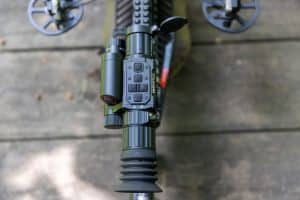

The integrated rangefinder and ballistic calculator are the features that separate this optic from a conventional crossbow scope. They also require the most work. Our testing showed that the ballistic profile may need to be refined as distance increases, so hunters should confirm actual point of impact at multiple ranges rather than trusting the calculator blindly.
Once we had the system dialed in, the accuracy was impressive. For a hunter who wants rangefinding, drop compensation, digital recording, and day/night capability in one optic, the ZULUS HD V2 deserves a serious look.
Editorial note: Always follow the manufacturer’s mounting and setup instructions and verify current hunting regulations governing electronic, rangefinding, recording, and night-vision optics in your jurisdiction.