
Spend enough time in pro shops, at ATA, or leaning on the counter of your local bow shop, and you start to notice patterns. Gear gets faster. It gets quieter. It gets narrower. Every year, manufacturers promise something that helps hunters shoot better, help them shoot farther, or help them shoot with more confidence when the moment of truth arrives.
But lately, the biggest shift hasn’t been happening in limbs or cams or trigger assemblies. It’s happening on top of the rail.

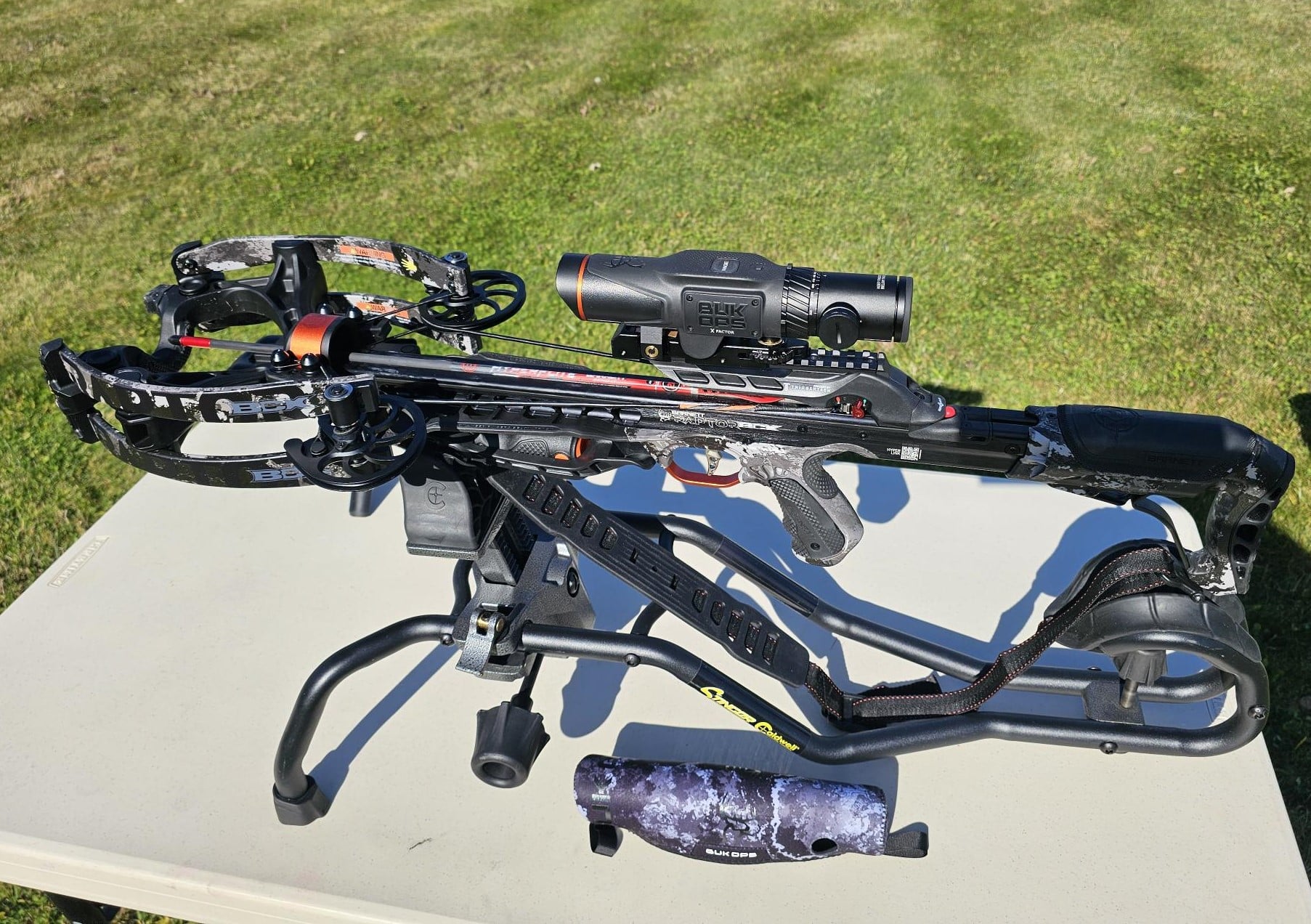
Rangefinding scopes are no longer futuristic conversation pieces sitting behind glass displays. They are showing up in camps, climbing into treestands, and riding in UTV gun racks across the country. What once felt like cutting-edge technology reserved for gear junkies is steadily becoming part of the mainstream crossbow conversation.
That raises a question more hunters are starting to ask:
Are rangefinding scopes the future — and are traditional optics slowly on their way out?
The answer isn’t as simple as yes or no. Like most things in the hunting world, it depends on how you hunt, what you value, and how much technology you want between yourself and the animal. But one thing is certain — crossbow optics are changing faster right now than at any point in the weapon’s modern history.
The Moment That Changed Distance Judgement
Every experienced hunter has lived it. A buck steps out just inside the timber. He looks close — very close. Your brain says 30 yards. Maybe 35. You settle the reticle, squeeze the trigger, and watch your bolt sail clean over his back. Later, after replaying the shot a hundred times, you realize he was standing at 42.

Distance deception happens more than hunters care to admit. Rolling terrain, shadows, adrenaline, and fading light all mess with depth perception. Even seasoned hunters misjudge yardage when seconds count. Traditional crossbow scopes forced hunters to solve that problem through repetition. You practiced at known distances. You memorized holdover lines. Eventually, ranging by eye became second nature.
But rangefinding scopes attack that uncertainty head-on. Instead of guessing, you know.
Push a button. Get the distance. Aim with confidence. For many hunters — especially those newer to crossbows — that kind of clarity is hard to ignore.
Why So Many Hunters Are Paying Attention
The appeal of rangefinding optics goes beyond convenience. At its core, it’s about removing variables.
Crossbows are incredibly accurate tools, but accuracy only matters if the aiming solution matches the distance. When yardage is off, even the fastest bow can’t fix it. Integrated ranging eliminates one of the biggest causes of misses. It also reduces movement. Anyone who has hunted whitetails from a treestand understands how quickly an opportunity can disappear. Raising binoculars or a separate rangefinder, lowering it, then finding the animal again through your scope introduces motion, and motion gets busted.
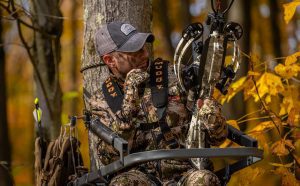
With a rangefinding scope, the process becomes fluid. Range. Aim. Shoot. Less choreography. More efficiency. Western hunters, who often deal with changing distances, broken terrain, and animals that rarely cooperate, have been especially quick to see the advantage. But even in tight Eastern hardwoods, hunters are realizing that precision buys confidence.
And confidence kills hesitation.
The Learning Curve Just Got Shorter
Here’s something longtime hunters sometimes overlook: crossbows continue to pull new people into archery seasons every year. Some come from rifle backgrounds. Others return to the woods after shoulder injuries or age makes vertical bows tougher to manage. Many simply want a weapon that blends archery challenge with firearm-like precision. Rangefinding scopes can dramatically shorten the learning curve for these hunters.
Instead of spending an entire summer mastering holdover math, they can focus on fundamentals — trigger control, shot selection, and patience. Does that make the hunt easier?
Not exactly.
Animals still don’t cooperate. Wind still drifts bolts. Buck fever still scrambles brains. But when technology helps eliminate preventable mistakes, success rates often climb — and success is what keeps new hunters coming back. In an era where hunter recruitment matters more than ever, tools that build confidence tend to stick around.
Still, Not Everyone Is Ready to Make the Jump
For every hunter excited about smart optics, another is perfectly content running a traditional scope — and has no intention of changing. Talk to enough veteran crossbow hunters and you’ll hear the same themes surface again and again.
Reliability matters.
Traditional scopes are beautifully simple. Once sighted in, they rarely demand attention. No batteries. No electronics. No firmware. They just work.
That simplicity creates trust. And trust is everything when the nearest truck is miles away and the temperature is dropping fast. Electronics, by nature, introduce potential failure points. Batteries drain quicker in cold weather. Moisture can compromise circuitry. Even the toughest systems aren’t immune to the occasional glitch.
Manufacturers have made enormous strides in durability, but mechanical simplicity still holds an edge when conditions turn nasty. Backcountry hunters and late-season diehards notice that.
When your hunt hinges on one opportunity, dependable often beats sophisticated.
The Weight and Balance Conversation
It may sound minor until you carry a bow all day, but ounces matter. Adding electronics to an optic can shift how a crossbow balances — particularly on already front-heavy setups. Some hunters won’t care. Others will notice immediately.
Minimalists tend to favor lighter rigs that shoulder quickly and maneuver easily in tight cover. For them, a streamlined traditional optic simply feels right. Gear is personal like that. The best setup isn’t always the newest. It’s the one that disappears in your hands when the shot presents itself.
Let’s Talk About the Ethics Question
Whenever technology advances in the hunting space, debate follows close behind. Rangefinding scopes are no exception. Some hunters quietly wonder if integrated ranging edges too close to removing skill from the equation. After all, judging distance has long been part of the challenge that separates archery from rifle hunting.
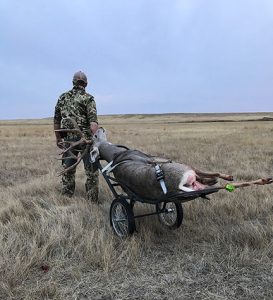
Others argue the opposite — that tools promoting precise shot placement support ethical harvests and reduce wounded game. It’s a familiar cycle.
Compound bows once stirred controversy. So did laser rangefinders. Mechanical broadheads had their moment too. Each innovation forced hunters to reconsider where they personally draw the line between assistance and ability.
Over time, most technologies become accepted as hunters adapt and wildlife agencies establish regulations. Expect the same progression here. The larger truth is this: equipment has always evolved. The responsibility attached to pulling the trigger has not.
No optic replaces judgment.
Technology Doesn’t Eliminate Skill
There’s a misconception floating around that rangefinding scopes somehow “do the hunting for you.” Anyone who believes that hasn’t spent much time in the woods. Even with perfect yardage, hunters must still manage angles, read animal posture, control breathing, and execute the shot. Wind can still nudge a bolt off course. Animals still duck strings.
And perhaps most importantly, discipline still determines whether a hunter takes the shot at all. Technology provides information. Experience decides what to do with it.
The best hunters will always be the ones who prepare relentlessly and refuse low-percentage opportunities — regardless of what optic sits on their rail.
Where Traditional Optics Continue to Shine
Despite all the buzz around smart scopes, conventional optics aren’t fading into irrelevance anytime soon. If anything, they remain the backbone of crossbow hunting for several reasons.
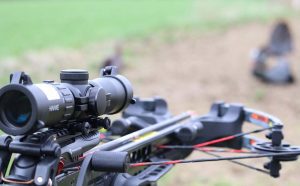
Simplicity:
Fewer moving parts mean fewer worries.
Affordability:
Traditional scopes still deliver excellent clarity and performance without stretching budgets.
Familiarity:
Millions of animals have been cleanly harvested using standard reticles. Confidence built over years is hard to replace.
Dependability:
When conditions turn brutal, uncomplicated gear often proves its worth.
There’s a quiet comfort in equipment you never have to second-guess.
Follow the Industry — It Tells a Story
If you want a glimpse of the future, watch where manufacturers invest their resources.
Right now, that investment is pouring into smarter optics.
Engineers are refining ballistic calculators, improving battery efficiency, speeding up ranging systems, and designing displays that feel intuitive rather than distracting.
The mission is clear: make the technology seamless enough that hunters stop thinking about it altogether.
When gear reaches that point — when it simply becomes part of the experience — adoption tends to accelerate quickly.
Remember when carrying a handheld rangefinder felt optional?
Today, most serious bowhunters wouldn’t leave the truck without one.
Integrated optics could follow a similar trajectory.
Replacement Isn’t the Right Word
Here’s where the conversation often goes sideways. People frame it as a takeover — smart optics versus traditional glass. But the hunting world rarely works in absolutes.More likely, we’re headed toward expansion rather than replacement.
Traditional scopes will continue to serve hunters who value reliability and simplicity. Rangefinding optics will attract those who appreciate cutting-edge capability. Both can thrive.
Choice has always been one of hunting’s greatest strengths. Different terrains, different species, different styles — there has never been a single “right” way to pursue game. Optics are simply the latest expression of that diversity.
Should You Consider Making the Switch?
That depends entirely on your hunting style.
A rangefinding scope might make sense if:
-
You hunt areas where distances constantly change
-
You want to reduce decision time before the shot
-
You enjoy modern gear
-
You’re newer to crossbows and want added confidence
A traditional optic might remain the better fit if:
-
Reliability tops your priority list
-
You hunt remote country
-
You prefer lighter setups
-
You trust the system you already know
Neither path is wrong. The best optic is the one that helps you execute clean, repeatable shots when adrenaline spikes and seconds matter.
Everything else is just preference.
Per our affiliate disclosure, we may earn revenue from the products available on this page. To learn more about how we test gear, click here.